
Healthy lifestyle guide
A Practical Guide to Healthy Living
Food, movement, sleep, and hydration — the everyday baseline that natural supplements for men are meant to support, not replace.
This guide collects the everyday habits that matter most for men: food, movement, sleep, and hydration. None of it is exotic, and none of it needs a gym membership or a special diet. The point is to give you a clear baseline so a supplement routine has something to build on. Work through the sections in any order — each one stands alone and ends with something you can try this week.
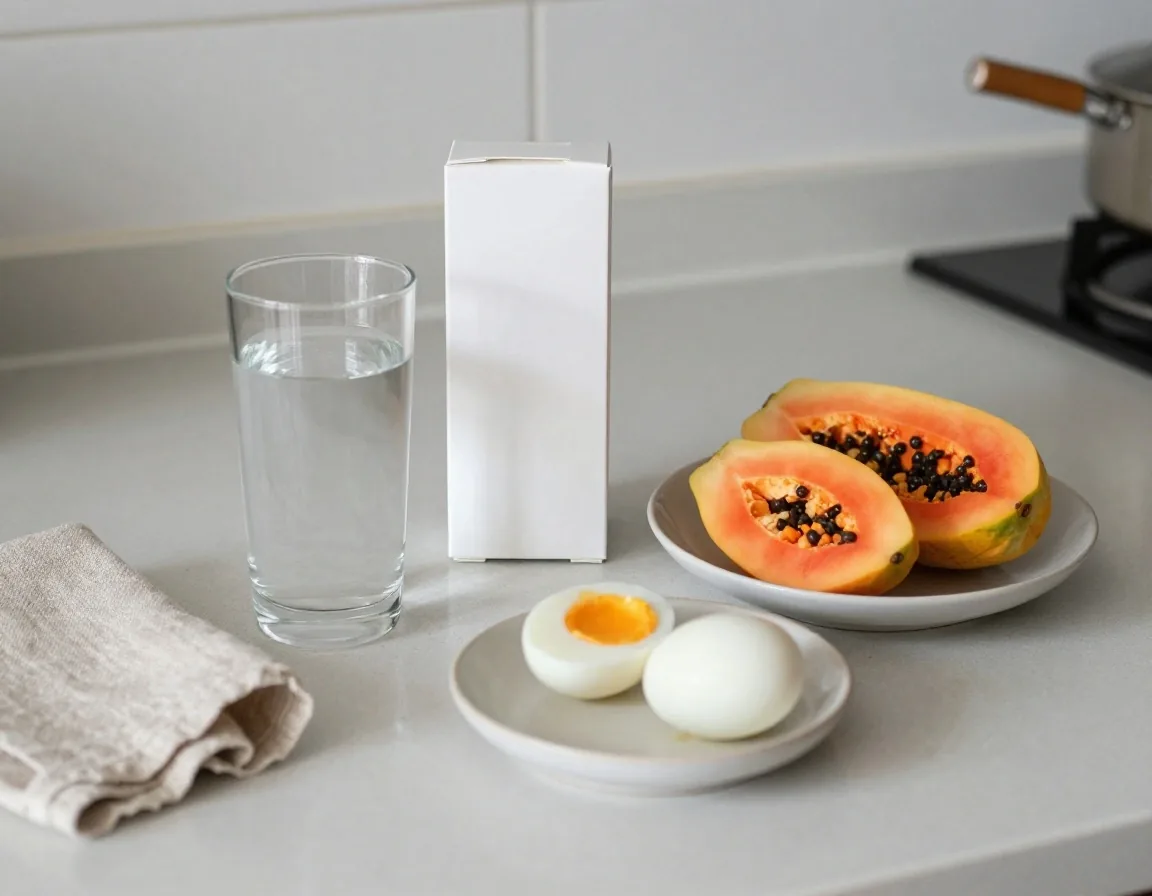
Start with what is already on your table.
Covers
Food
Covers
Movement
Covers
Sleep
Covers
Hydration
How this guide is organised
Five habits, one order of priority
Read the chapters in any order, but fix them in this order. Sleep and food carry more of the result than anything you can buy, and hydration is the easiest one to get right today.
Food
Build meals around what you already eat
You do not need imported ingredients to eat well in Indonesia. Rice, fish, eggs, tempeh, tofu, leafy greens, and fruit cover most of what a man needs. The common problem is not the food but the pattern: skipped breakfasts, late heavy dinners, and long gaps between meals.
Try to get protein at two or three meals, and add a vegetable or fruit to each. That change alone often improves how steady you feel across the day, without any supplement involved. It also means that when you do add vitamins and minerals for men later, you are topping up a diet that already works rather than patching a gap.
-
Two or three proteins a day
Eggs at breakfast, fish or tempeh at lunch, chicken or tofu at dinner. Rotate rather than repeat.
-
Colour on every plate
Kangkung, spinach, carrot, tomato, papaya, banana. Cheap, local, and the part most men skip.
-
Close the long gaps
If lunch runs to 3 PM, keep something small at your desk. A handful of nuts or fruit is enough.
-
Eat earlier at night
Heavy dinners close to bedtime sit against the sleep advice in the next chapter.
Nothing here requires a special order or a supplement.

Movement
Consistency Beats Intensity
Men often start with an ambitious plan and quit within a month. A better approach is a small, repeatable amount of activity: a brisk walk most days, two or three strength sessions a week, and something you enjoy for the heart and lungs.
Badminton, futsal, running, and cycling all count. The goal is regularity, not heroics. If you have been inactive, start easier than feels impressive and add load slowly — your body adapts to what you repeat, not to what you attempt once. This is also the point where energy and endurance supplements start to make sense: they sit on top of a routine, they do not stand in for one.
A week you can actually repeat
This is a shape, not a programme. Shift the days to fit your schedule, keep the mix, and let a missed session be a missed session rather than the end of the plan.
Most days
Brisk walk
Twenty to thirty minutes, ideally before the heat or after it drops. Commute on foot if you can.
Two or three times
Strength
Bodyweight, bands, or a gym. Push, pull, squat, carry. Thirty minutes is plenty when it is regular.
Once or twice
Something you enjoy
Badminton, futsal, swimming, cycling. Enjoyment is what keeps the rest of the week standing.
How daily energy and endurance support is framed alongside training, in plain terms.
Sleep
The cheapest performance lever
Seven to nine hours is the usual adult range, and most busy men fall short. Sleep affects mood, focus, recovery, and appetite, which is why it touches everything else in this guide.
A fixed wake time, a dark room, and less screen time in the last hour all help. Caffeine after mid-afternoon is a common hidden cause of poor sleep, especially in a coffee-heavy culture. Fix sleep first, then review diet and supplements — the order saves money and effort, and it makes men's health support easier to judge honestly.
Try this for two weeks
Hydration and stress
Drink Before You Feel Thirsty
In a tropical climate you lose fluid faster than you notice. Thirst arrives late, so waiting for it means you are already behind. Keep a bottle within reach and drink at set points: on waking, with meals, and around any training.
If you sweat heavily or train long, replace electrolytes, not just water. Pale urine is a rough, everyday check. Good hydration improves concentration and how you feel during exercise, with no product required.
Chronic stress drains energy as surely as poor sleep. You do not need to eliminate it; you need regular ways to step back. Short walks, breathing exercises, time away from the phone, or simply a hobby you enjoy all help. Men often ignore this because it feels unproductive, but recovery is part of staying useful at work and at home.

Set points through the day
- On waking, before coffee.
- With every meal, not instead of it.
- Before and after training, in small amounts.
- One short walk away from the desk each afternoon.
Where supplements fit in
Last layer, not first
Once food, movement, sleep, and hydration are reasonably handled, a vitamin and mineral product can cover the gaps that a busy or travel-heavy week leaves. It is a top-up, and calling it that keeps expectations honest.
If your basics are shaky, fix those first and revisit the supplement question later. If they are steady, the pages below show how to pick a product and what to look at on the label.
Start here
Browse products
Natural capsules for strength and vitality, everyday men's vitamin supplements, and other healthy lifestyle products, listed with their format and intended use.
Popular products for menGo deeper
Energy guidance
How daily energy and endurance support is framed for men who train, travel, and work long weeks — and where the limits of a supplement sit.
Read energy guidanceDecide well
Choosing a supplement
What to read on a panel — ingredient form, per-serving amounts, format, and intended use — before you commit to a routine.
Choose a supplementSupplements are intended as dietary supplements, not medicines. Fix the basics first, then choose.
Making habits stick
Pick one change this week
Habits survive when they are small and attached to something you already do. Link a walk to your lunch break, water to your desk routine, and your supplement to breakfast. Track one thing for two weeks, not five.
If a habit keeps failing, make it smaller rather than pushing harder. This approach is unglamorous and it works far more often than a full lifestyle overhaul.
-
Water at the desk
Fill a bottle when you sit down. Empty it before you leave.
-
Walk after lunch
Fifteen minutes, same route, most days. Attach it to a meal you never skip.
-
Protein at breakfast
Eggs, tempeh, or yoghurt. It closes the gap that becomes a 3 PM slump.
-
A fixed wake time
Set the alarm for the same hour for fourteen days and keep the record somewhere visible.
Questions we get
Practical answers
If your question is about a specific product, the contact page below reaches the Jakarta office during working hours.
Should I start a supplement before fixing my diet and sleep? + −
No. Food, sleep, and hydration carry more of the result, and they are free. A vitamin and mineral product works best as a top-up on a routine that is already reasonably steady. Fix the basics first, then revisit the question with clearer expectations.
Do natural supplements for men take the place of meals? + −
No. A capsule is not a meal. Rice, fish, eggs, tempeh, greens, and fruit do the main work; a supplement only covers what a busy or travel-heavy week leaves open. Treat it as one small item in a routine, not the routine itself.
I have never trained. Where do I begin? + −
With walking. Most days, twenty to thirty minutes, at a pace where conversation is possible but not comfortable. Add two short strength sessions once the walking is a habit, and start easier than feels impressive. Consistency is the part that works.
Is drinking more water really worth tracking? + −
Only loosely. In Jakarta's climate you lose fluid faster than thirst signals it, so set points through the day work better than counting litres. Pale urine is a rough everyday check. If you train long or sweat heavily, replace electrolytes rather than water alone.
What if I already take several products at once? + −
Read the panels side by side before adding another. Overlapping products can repeat the same vitamins and minerals, so simplify to one clear routine. If you take prescription medicine, have a health condition, or are unsure what suits you, speak with a qualified professional before starting anything new.
Next step
Start with the basics, then choose
Pick one change from this guide and run it for two weeks. When food, movement, sleep, and hydration are reasonably in place, browse the products or read how to compare them. Questions about a specific item go to the Jakarta office during working hours.
Visit
Jl. MH Thamrin No. 10, Menteng, Jakarta Pusat, DKI Jakarta 10320
Call
+62 21 3192 2565
Hours
Monday to Friday, 9:00 AM – 6:00 PM